Knitwear knowledge center
Learn materials, gauges, stitches and development risks
Use this center to understand knitwear terms before reviewing AI proposals, Techpack drafts, sample requests, and material documents.
Featured references
Start Here
Gauge Knowledge
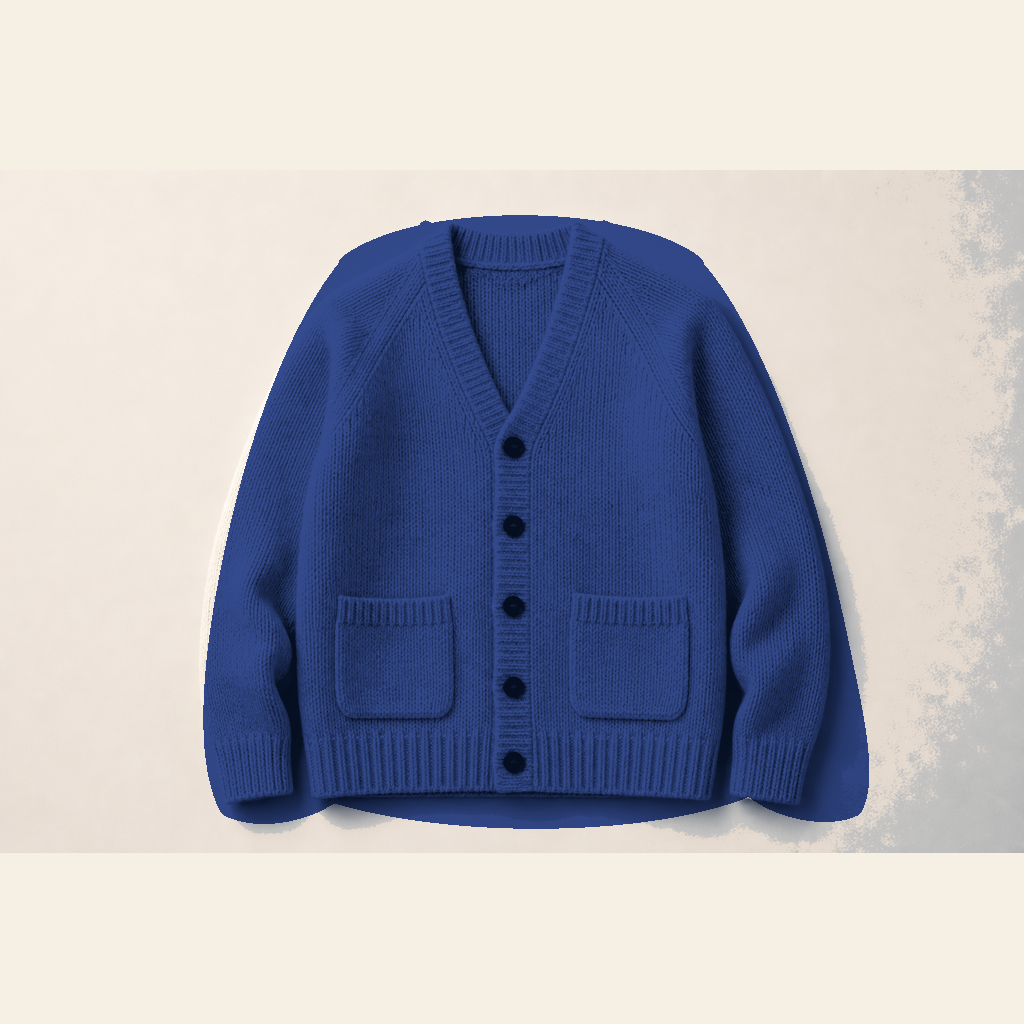
3GG Chunky Gauge Usage Guide
3GG is suitable for chunky, heavy, outerwear-like sweaters and cardigans.
Gauge Knowledge
7GG Midweight Gauge Usage Guide
7GG is suitable for autumn/winter midweight cardigans, pullovers, and half zip sweaters.
Gauge Knowledge
12GG Fine Gauge Usage Guide
12GG works for business, lightweight, spring/autumn knitwear.
Stitch & Knit Structure
Plain Knit Structure Guide
Plain knit has a clean surface, lower cost, and works well for basic styles.
Gauge Knowledge
3GG Chunky Gauge Usage Guide
3GG is suitable for chunky, heavy, outerwear-like sweaters and cardigans.
View Details
3GG is a chunky gauge with heavy fabric and visible texture. It works well for winter chunky sweaters, cardigans, jacket-like knits, and vintage styles. Its cost impact comes from yarn consumption, knitting speed, and finishing difficulty. If a customer wants a lightweight business look, 3GG is usually not the first choice.
Gauge Knowledge
7GG Midweight Gauge Usage Guide
7GG is suitable for autumn/winter midweight cardigans, pullovers, and half zip sweaters.
View Details
7GG is a common midweight gauge for ODM knitwear. It works for men's cardigans, basic pullovers, and half zip sweaters. It provides a balanced mix of cost, handfeel, and production stability, making it useful for first sample ranges and core collections.
Gauge Knowledge
12GG Fine Gauge Usage Guide
12GG works for business, lightweight, spring/autumn knitwear.
View Details
12GG is a fine gauge with thinner fabric and a refined surface. It suits business sweaters, polo sweaters, knit vests, and spring/autumn styles. Fine gauge styles require stable yarn quality and size control, and are best for clean structures and refined appearance.
Stitch & Knit Structure
Plain Knit Structure Guide
Plain knit has a clean surface, lower cost, and works well for basic styles.
View Details
Plain knit is a basic structure with a clean appearance. It is suitable for basic pullovers, cardigans, vests, and business casual styles. It has lower development risk and is a good starting point for startup brands or cost-sensitive customers.
Stitch & Knit Structure
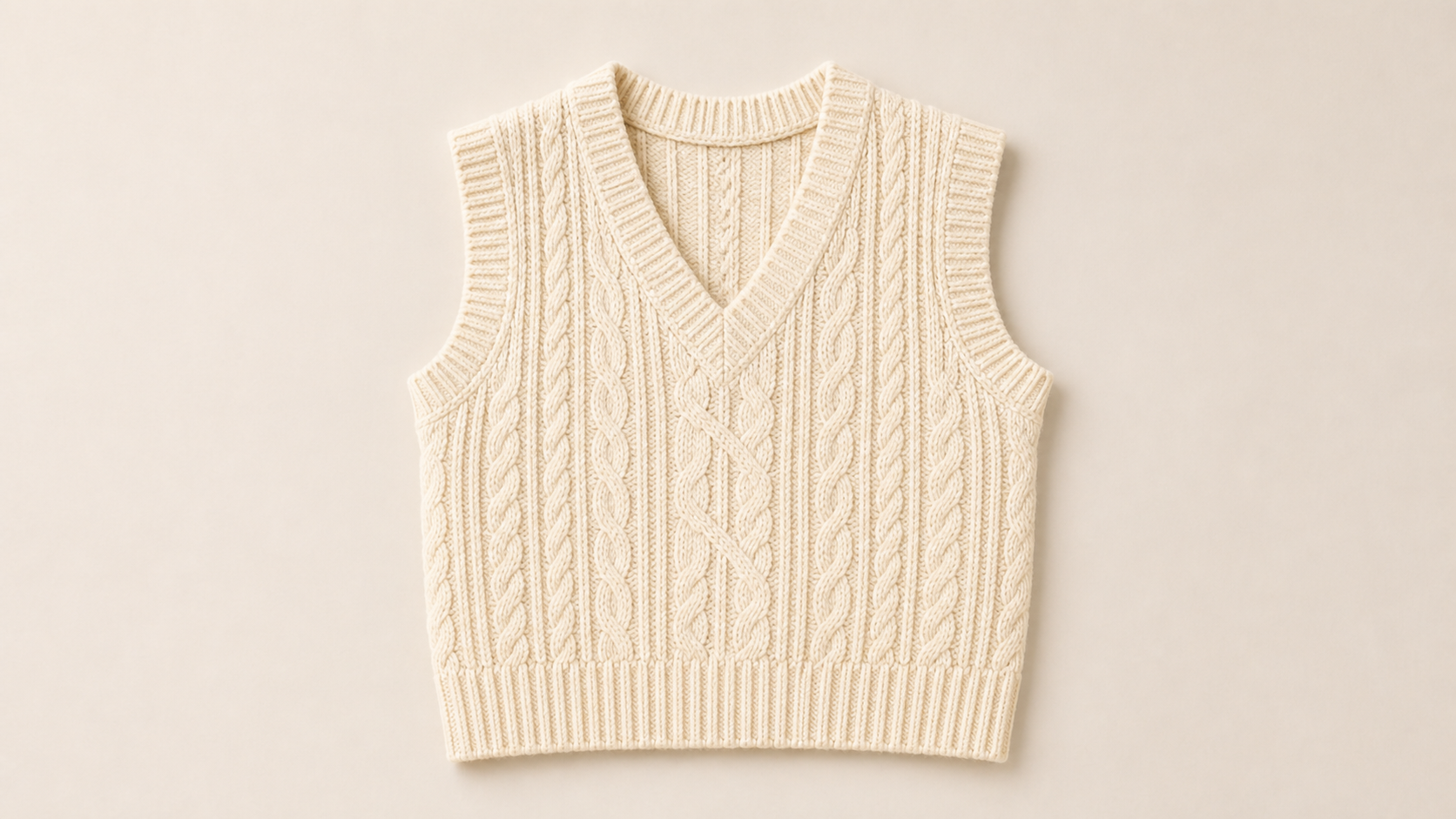
Cable Knit Structure Guide
Cable knit has strong texture for vintage winter styles, with higher cost and production time.
View Details
Cable knit has visible raised texture and fits vintage, preppy, outdoor, and winter heavy sweater styles. It increases knitting time and yarn consumption. Complex cables may also affect size stability.
Stitch & Knit Structure
Jacquard Knit Structure Guide
Jacquard works for patterns and multi-color designs, but more colors increase cost and risk.
View Details
Jacquard is useful for patterns, color blocks, brand elements, and all-over designs. Color count, float length, and artwork complexity affect cost, handfeel, weight, and production risk.
Stitch & Knit Structure
Intarsia Knit Technique Guide
Intarsia suits large patterns and logos, but has high cost and high workmanship risk.
View Details
Intarsia is suitable for large patterns, color blocks, and logos with clear edges, but it is technically complex. For limited budgets, embroidery, woven label, or simpler jacquard can be suggested.
Yarn & Material Knowledge
Wool Blend Yarn Guide
Wool blends suit mid-to-premium autumn/winter sweaters, with warmth and higher cost than cotton acrylic blends.
View Details
Wool blend yarn balances warmth, handfeel, and cost. It fits autumn/winter cardigans, pullovers, and half zip sweaters. Pilling, care, and shrinkage risks should be considered, and composition plus care should be clear in the techpack.
Yarn & Material Knowledge
Cotton Blend Yarn Guide
Cotton blends are suitable for spring/autumn, the USA market, and cost-controlled products.
View Details
Cotton blend yarn has a dry handfeel and stable cost. It is suitable for spring/autumn basics, polo sweaters, and lightweight cardigans. It is less warm than wool yarns but works well for transitional and easy-care products.
Yarn & Material Knowledge
Cashmere Blend Yarn Guide
Cashmere blends suit premium positioning but carry higher sample fee, MOQ, and cost risk.
View Details
Cashmere blends fit premium, gifting, boutique, and quiet luxury positioning with a soft handfeel. Target price, MOQ, sample budget, and supply stability should be confirmed early to avoid price mismatch after development.
Cost Estimation Knowledge
How MOQ Affects Unit Cost
Lower MOQ usually increases unit cost through yarn purchasing, sampling, wastage, and efficiency.
View Details
MOQ affects yarn purchase, dyeing, machine planning, wastage allocation, and labor efficiency. Low MOQ may increase unit price. If the customer has a low target price, recommend stock yarns, core colors, basic stitches, and standard packaging.
Cost Estimation Knowledge
How Logo Method Affects Cost
Embroidery, woven label, jacquard, and intarsia logos have different cost and risk levels.
View Details
Logo cost depends on method, position, size, color count, and artwork complexity. Woven labels and small embroidery are usually more controllable, while jacquard and intarsia cost more. For complex logos, request clear vector artwork and assess whether simplification is needed.
Cost Estimation Knowledge
How Packaging Options Affect Cost
Basic polybags are low cost, while branded polybags, gift boxes, and premium packaging increase cost and MOQ risk.
View Details
Packaging cost depends on material, printing, quantity, accessories, and packing complexity. Basic clear polybags work for samples and cost-control projects. Branded printed polybags, gift boxes, and premium sets are useful for brand projects, but MOQ, sample leadtime, and size should be confirmed early.
Logo & Trim Knowledge
Embroidery Logo Usage Guide
Embroidery works for small logos; very fine or complex artwork should be simplified.
View Details
Embroidery suits local positions such as left chest, sleeve, and hem. It has a solid texture and medium cost. Fine lines, gradients, and tiny complex text are not suitable for direct embroidery. Vector artwork and workmanship review are needed.
Logo & Trim Knowledge
Jacquard Logo Usage Guide
Jacquard logos integrate into the knit, but cost and MOQ requirements are higher.
View Details
Jacquard logos are knitted into the fabric and work for patterned, all-over, or strongly branded series. Color count and artwork complexity must be controlled. It is usually costlier and riskier than woven labels or embroidery.
Sizing & Fit Knowledge
USA Men's Sweater Size Guide
USA men's regular fit usually focuses on chest, shoulder, body length, sleeve length, and hem.
View Details
USA men's sizing is usually more relaxed than Asian sizing. Regular fit should control chest, shoulder, sleeve length, body length, and hem ease. When confirming sizes, ask for target market, existing brand size chart, model height/weight, and intended fit.
Techpack Knowledge
Basic Techpack Content Guide
A techpack should include product overview, size specs, yarn, stitch, color, logo, trims, packaging, and revisions.
View Details
A basic techpack should include style information, size specs, yarn composition, gauge, stitch, color, logo method, trims, packaging, workmanship notes, and revision history. Clearer information reduces sampling communication cost and supports quotation plus production risk review.
Production Risk Knowledge
Reference Image IP Risk Guide
Reference images should guide style direction only and must not be copied directly.
View Details
Customer reference images can help understand style, fit, color, and detail direction, but brand styles, graphics, logos, or protected designs should not be copied directly. AI proposals and ODM adaptations should include clear differentiation and keep customer confirmation records.
Customer Communication Knowledge
Estimated Price Disclaimer Template
Estimated price is for reference only; final quotation depends on yarn, gauge, quantity, logo, trims, packaging, and review.
View Details
The estimated price is for early decision reference only and is not an official quotation. Final pricing depends on yarn, gauge, quantity, logo method, trims, packaging, sample result, and cost review. Avoid promising a fixed price. Use a price range and explain the main cost factors.
Brand Support Knowledge
Startup Brand First Knitwear Development Guide
Startup brands should begin with cost-controlled, production-friendly, easy-to-sell basics before complex styles.
View Details
For a startup brand's first knitwear range, keep SKU count focused. Start with basic pullovers, cardigans, or vests using stable yarns, core colors, and standard packaging. Complex logos, premium packaging, and large jacquard designs can be second-stage upgrades to avoid excessive initial cost and risk.
